
Silicone Render vs Monocouche Render in Essex: Which Is Better for Your Home?
If you are comparing silicone render vs monocouche render in Essex, the honest answer is that neither system is automatically the best choice in every situation.
Both can work well. Both have their place. But the right option usually depends on the property itself, including the wall background, the condition of the existing surface, how exposed the elevation is, and what you want the render to achieve over the long term.
At Essex Render Pros, we look at this as more than just a finish comparison. We look at the property, the substrate, the level of preparation required, and which system is genuinely best suited to the job.
In general, across many Essex homes, we would usually lean more towards silicone render than monocouche. That is not because monocouche is a poor option. It is because silicone render often proves to be the more versatile choice across a wider range of property types, wall conditions, and renovation-led projects.
That said, monocouche can still be an excellent option on the right type of home and the right background.
Silicone Render vs Monocouche Render: What Is the Difference?
One of the most common misunderstandings is homeowners assuming silicone render and monocouche render are basically the same thing.
They are not.
They can sometimes look similar once finished, and both can give a clean, coloured rendered exterior, but they are different systems and they do not suit every project in the same way.
A lot of comparisons focus only on:
- final appearance
- upfront cost
- colour options
Those things matter, but they are only part of the picture.
The more important questions are:
- What is the wall underneath like?
- Is the property straightforward masonry or does it have mixed backgrounds?
- Has it been painted before?
- Are there cracks, patch repairs, pebbledash, or older render issues?
- Is the property exposed to more weather?
- Is long-term appearance a key priority?
That is why this is not just a style decision. It is really a system suitability decision.
Which Render Do We Usually Recommend in Essex?
For many Essex homes, we would generally lean more towards silicone render.
That is not because monocouche render is wrong. It is because silicone tends to be the more flexible option once you move beyond very simple, straightforward wall backgrounds.
On a clean and suitable masonry background, especially where the homeowner wants a through-coloured finish, monocouche can still make very good sense.
But once you get into:
- older properties
- renovation-led jobs
- mixed backgrounds
- exposed elevations
- insulated render systems
- homes where weathering and staining are bigger concerns
silicone often becomes the stronger recommendation.
So our view changes depending on:
- the wall build-up
- the existing condition of the surface
- how exposed the elevation is
- whether the system needs to deal with more complexity
- what the homeowner wants from the finish over time
If the job is simple and the background suits it, monocouche can still be a very good option. If the job is more complex or more system-dependent, we would usually lean towards silicone.
When Silicone Render Often Makes More Sense
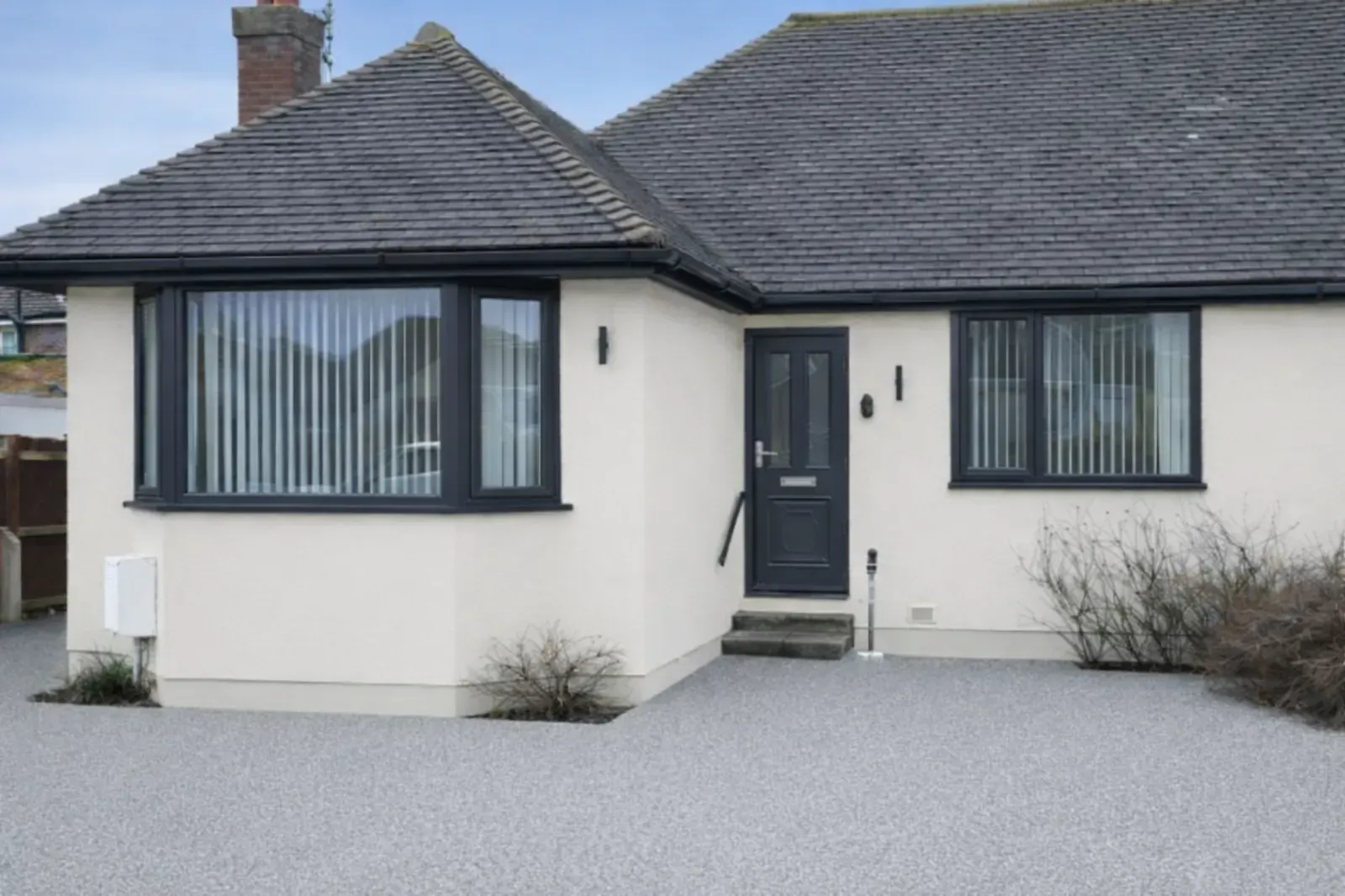
A common Essex scenario is an older semi-detached house or bungalow with:
- previously painted walls
- patch repairs
- mixed background quality
- inconsistent surface condition across the elevation
On that type of property, the choice is usually less about picking a finish in isolation and more about choosing the right system for the condition of the wall.
That is where silicone often makes more sense.
Another example is a home on a more exposed elevation where the owner is especially concerned about:
- weathering
- algae
- staining
- keeping the finish looking cleaner for longer
In that sort of situation, silicone often becomes the stronger option because long-term appearance matters more.
So if the property is more renovation-led, more exposed, or simply less straightforward, silicone render often gives the more reliable overall route.
When Monocouche Render Is Still a Strong Choice
Monocouche absolutely still has a place, and it can be a very sensible recommendation on the right project.
For example, on a:
- newer house
- clean blockwork elevation
- straightforward extension
- simple masonry-built property
monocouche can still be a strong option if the substrate suits it properly and the homeowner wants a clean, through-coloured rendered finish.
This matters, because some online comparisons make it sound as if silicone is always better and monocouche is somehow second best.
That is not how we see it.
On the right background, monocouche can still perform very well and be the more honest recommendation. The key is making sure the property genuinely suits it.
Silicone Render vs Monocouche: Long-Term Performance
When homeowners ask about long-term performance, we usually explain the trade-offs in a practical way rather than oversimplifying it.
Weather resistance and appearance retention
In general, silicone often has the edge when the priority is:
- weather resistance
- helping the surface stay drier
- reducing the visual effect of staining
- keeping the finish looking cleaner for longer
That can matter on Essex homes where weathering, algae, and general exposure are part of the conversation.
That does not mean silicone is maintenance-free or perfect forever. No render is. But in more situations, it tends to be the stronger long-term option where appearance retention matters.
Cracking risk
This is an area where homeowners are often given over-simplified answers.
We would never say that one system definitely cracks and the other does not.
In most real-world cases, cracking has far more to do with:
- movement
- the background
- preparation
- detailing
- installation quality
rather than simply whether the finish is silicone or monocouche.
So we would always be cautious about anyone reducing that question to a simple product comparison.
Staining, algae, and visual ageing
Again, this depends on the property and the conditions.
Monocouche can still perform very well on the right masonry background, but it can be less forgiving visually over time if the elevation is prone to staining or if appearance retention is a major concern.
That is one of the reasons silicone often becomes the preferred option where the homeowner is especially focused on how the house will look several years down the line.
Patching and future repairs
This is another practical point homeowners often overlook.
Local repairs and patching are never something to ignore when choosing a system. A finish may look great when first applied, but the longer-term reality matters too.
That is why the wall condition and system choice should always be looked at together, rather than choosing a render based only on colour or brochure appeal.
Common Mistakes Homeowners Make When Comparing Render Systems
Treating it as a simple finish choice
A lot of homeowners compare silicone and monocouche as if they are just two cosmetic finishes. In reality, the wall underneath often matters more than the final look.
Comparing price without comparing suitability
A cheaper system is not better value if it is the wrong fit for the wall. Equally, the more expensive option is not automatically better value if it is solving no real problem.
Assuming one system is maintenance-free
No external render system is completely maintenance-free. Good materials help, but preparation, detailing, exposure, and workmanship all matter.
Assuming one finish prevents cracking
Cracking cannot be reduced to a product name alone. The substrate and installation quality matter massively.
Which Is Better Value in Essex?
This should really be judged on value, not just price.
Paying more for silicone is often justified when the project is:
- more exposed
- more renovation-led
- more system-dependent
- more vulnerable to staining or weathering
- more focused on long-term appearance
In those situations, the extra cost can represent real value rather than just a higher upfront spend.
But we do not see silicone as automatically the better-value choice on every Essex property.
If the wall is straightforward, the background is suitable masonry or blockwork, and the homeowner wants a clean through-coloured finish without unnecessary complexity, monocouche can still be the smarter and more sensible recommendation.
The best recommendation is not always the most expensive one. It is the one that is right for the property.
If you are also comparing likely budgets, you may find our guide on how much it costs to render a house in Essex useful.
So Which Is Better for Your Home?
If you want the honest answer, it is this:
For many Essex homes, we would generally lean towards silicone render.
Not because monocouche is a poor option, but because silicone tends to be the more versatile choice across a wider range of jobs, especially where the wall condition, background complexity, exposure, or long-term appearance are bigger factors.
However, monocouche is still a strong option on the right property, particularly on straightforward masonry-built homes, extensions, or newer elevations where the substrate suits it properly.
So the better choice depends on:
- the existing wall condition
- the substrate
- whether it is a straightforward or renovation-led project
- how exposed the property is
- how important long-term appearance is to you
- whether the extra cost is solving a real problem
That is the real answer — not which one sounds better in theory, but which one is better suited to the actual house.
FAQ: Silicone Render vs Monocouche Render in Essex
Is silicone render better than monocouche?
Not automatically. Silicone is often the more versatile option, especially on older, more exposed, or more complex Essex properties, but monocouche can still be an excellent choice on the right masonry background.
Does silicone render last longer than monocouche?
It is not always as simple as one lasting longer than the other. Long-term performance depends heavily on the substrate, preparation, detailing, exposure, and installation quality. In many situations, silicone has advantages where weathering and appearance retention matter.
Is monocouche render cheaper than silicone render?
In many cases, yes. Monocouche can be the more cost-effective option. But cheaper does not always mean better value. The better-value option is the one that best suits the property and avoids problems later.
Does silicone render stop cracking?
No render system can guarantee that cracking will never happen. Cracking is usually more closely linked to movement, background condition, preparation, and workmanship than simply the finish type.
Which render is best for an older house in Essex?
For many older Essex homes, especially those with painted walls, repairs, mixed backgrounds, or greater exposure, silicone is often the stronger option. But the right answer still depends on the condition of the property.
Need Advice on the Right Render System for Your Essex Property?
At Essex Render Pros, we do not believe in pushing one system for every house.
We look at the property properly, assess the wall background, consider the condition of the existing surface, and recommend the render system that best suits the job.
So if you are trying to decide between silicone render and monocouche render in Essex, and you want honest advice based on real property conditions rather than generic sales talk, get in touch.
We can help you understand:
- what type of wall background you may have
- which system is likely to suit it best
- where the extra cost may be worth it
- and when a simpler option may be the more sensible recommendations
Send over your postcode and a few clear photos of the property, and we can give you practical guidance before arranging a site visit.